Office Relocation Services in Ealing
If you are planning an office move in West London, Office Relocation Services in Ealing can make the process far less stressful and far more organised. Whether you are moving a small start-up from a shared workspace, relocating a growing team from a converted house, or shifting an established company from a larger commercial premises, the right local support matters. An office move is not just about lifting boxes; it is about keeping your business running, protecting equipment, managing access on busy streets, and making sure staff can get back to work quickly.
Ealing is a busy and varied area, with a mix of high street offices, business centres, older terraces used for professional services, new-build developments, and light commercial units. That mix creates real moving challenges: narrow roads, parking restrictions, lift access, busy commuter times, and building rules that need to be respected. Choosing a local team familiar with the area can save time and help the move run more smoothly.
On this page, you will find practical information about what office relocation can include, how the process works, what affects cost, how to prepare your team, and why a local approach is often the most sensible choice for businesses in and around Ealing. If you are looking to request a free quote or book your service now, the details below should help you decide what you need.

Why local office relocation support matters in Ealing
Ealing has its own pace and layout, and that matters when you are moving a workplace. A move along Uxbridge Road is not the same as one from a quieter side street near Ealing Broadway. Access times, loading space, and parking permits can all affect how long the move takes and how disruptive it is to your staff, clients, and neighbours. A local moving team understands those conditions and can plan accordingly.
Businesses in the borough range from professional services and creative agencies to medical practices, education providers, consultancies, retailers, and small offices above shops. Each one has different priorities. Some need careful handling of IT equipment and confidential paperwork. Others need swift dismantling and reassembly of desks, meeting tables, shelving, and storage. A good office removal service adapts to your working environment rather than forcing you into a one-size-fits-all approach.
Working locally also helps when timing is critical. Many businesses want their move completed outside peak trading or commuting hours. Others need a phased relocation so staff can continue working during the transition. A team with experience in Ealing office removals can build a plan around your schedule, local traffic patterns, and building access arrangements.
Typical premises we help move
- Shared offices and co-working spaces
- Small and medium business offices
- Professional practices and clinics
- Studios and creative workspaces
- High street offices above retail units
- Commercial suites in business centres
- Light industrial and storage-based office areas
Every move starts with the same aim: reduce downtime, protect assets, and help your team settle into the new place with as little disruption as possible. That is the real value of office relocation services in Ealing delivered by people who know the area well.

What an office relocation service can include
Office relocation is usually broader than simply transporting desks and chairs. A proper service should support the full move from planning through to delivery and setup. Depending on your requirements, the work can include several stages that make the process more manageable for managers and staff alike.
Before moving day, a relocation team may help with planning the layout of the new office, identifying fragile items, assessing access, and working out the best sequence for packing and loading. Some companies also need help labelling departments, coordinating IT disconnection, or arranging storage for items that are not needed immediately.
On moving day, a professional service can provide trained movers, suitable vehicles, protective equipment, and the right tools for dismantling and reassembly. This is especially useful when you have modular furniture, filing cabinets, printers, screens, specialist chairs, or archive boxes that need to be moved carefully and efficiently.
Common services included in an office move
- Pre-move planning and survey
- Packing support and materials
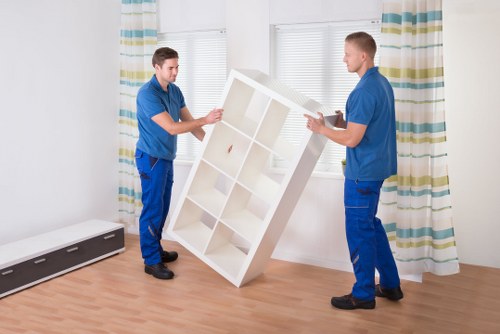
- Furniture dismantling and reassembly
- Safe transport of office furniture and equipment
- IT and electronics handling with care
- Document and file relocation
- Loading, unloading, and placement in the new premises
- Short-term or long-term storage if needed
- Waste removal or end-of-tenancy clearance where arranged
Some businesses also need specialist handling for sensitive items such as servers, artwork, presentation equipment, medical devices, or heavy filing systems. It is worth discussing these early so the right approach can be planned. The more clearly your needs are understood, the smoother the relocation is likely to be.
Important: a well-organised office move should not leave you trying to manage every detail alone. The best relocation support is designed to relieve pressure on your internal team and help everyone stay focused on work.
How office relocation works
Every company’s move is different, but most office relocations follow a clear process. Understanding that process helps you plan ahead and avoid last-minute problems. If you are arranging a move within Ealing or to another nearby business district, a structured approach is especially helpful.
The first step is usually a discussion about the size of the office, the type of furniture and equipment involved, your preferred move date, and any access issues at either property. For example, an office near Ealing Broadway may have loading restrictions, while a converted building in a residential street may have limited parking and tighter stair access. A local team can factor these issues into the plan.
From there, the move can be scheduled around your business needs. Some customers want a single-day relocation. Others prefer a weekend move or a phased approach across several days. The right plan depends on how much equipment you have, how many staff are involved, and whether the new premises are fully ready.
Typical relocation stages
- Initial assessment – identifying the size of the move and any special requirements.
- Planning – agreeing the date, timings, access details, and layout considerations.
- Packing and labelling – preparing items in an organised way for easy unpacking.
- Disassembly – taking apart desks, shelving, or other furniture where needed.
- Transport – loading and moving items safely to the new site.
- Reassembly and placement – setting furniture and equipment where it belongs.
- Final checks – confirming that the office is ready for staff to resume work.
For many local businesses, the biggest benefit is not just the move itself but the reduction in disruption. When the process is well planned, staff can return to a functional workspace sooner, and managers do not have to juggle every moving task on top of their normal responsibilities.
Office relocation services in Ealing are most effective when they are organised around practical needs rather than guesswork. That means clear communication, careful scheduling, and a realistic understanding of the building and the local area.

Preparing your business for moving day
Preparation is one of the most important parts of any office move. Even with experienced movers, a well-prepared office is quicker to relocate and easier to settle into afterward. Good preparation also reduces the chance of broken items, missing files, and delays on the day.
Start by deciding what should move, what should be stored, and what can be disposed of before the relocation. Offices often collect old chairs, unused monitors, outdated paperwork, duplicate equipment, and broken furniture. Sorting through these items ahead of time can reduce the volume of the move and make the new office more efficient from day one.
It also helps to assign internal responsibilities. One person may be responsible for IT, another for files and archive boxes, and another for department sign-off. If you have a larger team, creating a simple moving plan for each department can prevent confusion. Clear labels are extremely useful, especially when you need equipment to go into specific rooms or floors in the new premises.
Useful preparation checklist
- Confirm your moving date and access times
- Notify staff of key responsibilities
- Back up digital files and check important data security steps
- Label desks, boxes, and sensitive equipment clearly
- Empty personal items and secure confidential documents
- Measure larger furniture to check it will fit in the new office
- Review parking or loading arrangements at both ends
- Plan where essentials will go first at the new location
If your workplace has multiple floors, narrow hallways, or limited lift access, it is useful to flag this early. The same applies to buildings with shared entrances, time-restricted deliveries, or rules around noise and loading. In Ealing, these practical details can make a big difference to how long the move takes.
Tip: keep an “essentials” box or trolley separate with items needed immediately after arrival, such as keys, chargers, stationery, basic tools, and important paperwork.

What affects the cost of office relocation?
Every office move is different, so the cost depends on a range of practical factors rather than a simple fixed figure. Businesses often want to know what drives the price, and that is a fair question. A good relocation service should be able to explain the main cost factors clearly so you can make an informed decision.
Size is one of the biggest influences. A small office with a handful of desks will naturally take less time and fewer resources than a larger workplace with many workstations, meeting rooms, archive cabinets, and specialist equipment. Distance matters too, although even a short move in Ealing can involve more time if the access is difficult or the building is busy.
Other factors include whether packing support is needed, whether furniture must be dismantled and reassembled, whether there are stairs or no lift access, and whether the move needs to happen outside standard working hours. The complexity of your IT setup and the need for secure handling of documents can also affect the amount of planning involved.
Factors that can influence a quote
- Amount of office furniture and equipment
- Number of floors, lifts, or stairs
- Parking, loading bay, or permit arrangements
- Packing requirements
- Specialist or fragile items
- Storage needs before or after the move
- Timing, such as weekend or out-of-hours relocation
- Complexity of setup at the new premises
When you request a quote, be as specific as possible. That helps the team understand the job properly and reduces the chance of surprises later. If your move involves multiple sites, phased relocation, or unusual access conditions, mention that early so everything can be planned accurately.
Request a free quote if you want a clearer picture of the service options available for your office move in Ealing. The more information you provide, the more useful the response is likely to be.
Why choose a local company for office removals in Ealing?
There are several reasons why businesses often prefer a local provider rather than a distant one. A local company is more likely to understand the streets, traffic flow, parking limitations, and property types that affect a move in the area. That knowledge is especially helpful if your office is near busy routes, transport hubs, or mixed-use buildings.
Local teams are also easier to coordinate with when you need flexibility. If your building manager changes access instructions, if your move date needs adjusting, or if a last-minute issue appears at either property, it helps to have a team nearby and responsive. That can make the difference between a stressful move and a controlled one.
Another advantage is practical familiarity with the local business environment. Ealing includes commercial spaces near the town centre, offices around transport links, and properties in surrounding neighbourhoods such as Acton, West Ealing, Northfields, Hanwell, Greenford, and Southall. A local service is more likely to understand how each area affects access, parking, and timing.
Benefits local businesses often look for
- Better understanding of local access and parking
- Flexible scheduling around business hours
- Reduced travel time and improved efficiency
- Practical support for mixed residential and commercial areas
- More straightforward communication during the move
- Experience with local office layouts and building types
For many customers, the real benefit is peace of mind. Knowing that the move is being handled by a team with local experience can make the process feel far more manageable. If you are comparing providers for office relocation services in Ealing, that local knowledge should be part of your decision.
Areas covered around Ealing
Office moves in Ealing often involve more than one neighbourhood, especially if a business is moving between business centres, residential conversions, or commercial units across West London. A local relocation service can usually support moves throughout the borough and surrounding areas, including:
- Ealing Broadway
- West Ealing
- Northfields
- South Ealing
- Hanwell
- Acton
- Greenford
- Southall
- Perivale
- Brentford and nearby West London locations
Many companies also relocate between Ealing and other parts of London, or from suburban office settings into more central commercial spaces. Whether you are moving a small practice nearby or transferring a larger operation across town, the same principles apply: careful planning, reliable handling, and clear communication.
Residential and commercial moving challenges in the area
Ealing is a place where residential and commercial spaces often sit close together. Offices may be located above shops, inside converted terraces, or within mixed-use developments. That creates different challenges from a purpose-built industrial site. You may need to think about shared entrances, neighbours, delivery times, narrow staircases, or limited waiting space for vehicles.
Commercial customers sometimes face loading bay rules, security desk procedures, or requirements from landlords and managing agents. Residential-style office premises may have stairs, tight front doors, or restrictions on using communal areas. A move that looks simple on paper can quickly become difficult if these details are not planned in advance.
That is why local office removal support is so valuable. When a team understands common access issues in Ealing, they can plan the vehicle position, route through the building, and order of operations more effectively. It reduces friction on the day and helps avoid avoidable delays.
Examples of common local complications
- Limited parking near town-centre properties
- Controlled loading zones or permit requirements
- Shared access in converted buildings
- Lift booking rules in modern office blocks
- Busy daytime traffic and school-run congestion
- Need to minimise noise or disruption to neighbours
If your workplace is in a tricky location, do not wait until moving day to raise the issue. A good relocation plan should account for these realities from the start.
Keeping business disruption to a minimum
One of the biggest concerns for any company planning an office move is downtime. Staff still need access to phones, computers, documents, and collaborative spaces. Clients may still expect the same level of service. A well-run relocation takes these pressures seriously.
There are several ways to reduce disruption. Moving outside business hours can help, especially for customer-facing teams. Phased moves can allow one department to relocate while others continue working. Temporary storage can be useful if the new office is not fully ready or if some items will not be used straight away.
Good communication inside the business matters too. Employees should know when to pack personal items, when equipment will be disconnected, and where to go on the first day in the new office. Clear instructions reduce confusion and help staff settle in faster.
Ways to reduce downtime during relocation
- Book the move well in advance
- Choose an appropriate time slot
- Label items by department and destination room
- Prepare IT and communications in advance
- Keep essential items accessible
- Use storage for non-essential items if needed
Professional office relocation services in Ealing are designed to keep the move efficient without rushing the important details. That balance is what most businesses need.
Frequently asked questions
How far in advance should I arrange an office move?
It is usually best to start planning as early as possible, especially if you have a larger office, specialist equipment, or a move date tied to lease deadlines. Early planning gives you more flexibility with scheduling and helps identify access issues before they become a problem.
Can you move offices outside normal working hours?
Many businesses prefer evening, weekend, or out-of-hours relocation to reduce disruption. This depends on the scope of the move, building rules, and the arrangements you want in place. It is worth discussing timing early when you request a quote.
Do office relocation services include packing?
Some do, and some offer it as an optional extra. Packing support can be useful if you have a busy team, fragile items, or lots of files and equipment to prepare. If you prefer to pack internally, a relocation service can still handle the transport and setup.
What happens to desks, chairs, and storage units?
Furniture can often be dismantled, moved, and reassembled as part of the relocation. This is especially useful for larger desks, modular systems, and heavy storage units. The exact approach will depend on the furniture type and condition.
Can you help with IT equipment?
Office moves commonly involve computers, monitors, printers, phones, docking stations, and other electronics. These items should be handled carefully and planned for in advance. If your move includes servers or more specialised equipment, make sure that is discussed before the moving date.
What if the new office is not ready yet?
Temporary storage can sometimes help bridge the gap if your new premises are delayed or you need to move in stages. This is useful for companies dealing with handover issues, refurbishment, or staggered occupation dates.
Choosing the right office relocation partner
When comparing providers, look beyond the basic promise of transport. Ask whether the team understands the type of building you are moving from, whether they can work around your schedule, and whether they can help with the practical side of setting up the new office. A successful move depends on more than just lifting items into a vehicle.
You should also think about communication. The best relocation experience usually comes from a service that listens carefully, asks the right questions, and explains what will happen at each stage. If a company takes time to understand your layout, equipment, and priorities, it is more likely to deliver a move that feels organised and manageable.
For many local businesses, Ealing office relocation services are about confidence as much as convenience. You want the move completed safely, sensibly, and with as little business interruption as possible. A local team with practical knowledge of the area can help you achieve that.
Before you confirm your booking, consider asking:
- What is included in the relocation service?
- How is fragile or confidential equipment handled?
- Can the move be scheduled around our business hours?
- Will furniture be dismantled and reassembled?
- How should we prepare items in advance?
- Are storage options available if needed?
Ready to plan your move?
If your business is preparing for a relocation in or around Ealing, now is the right time to start planning. The earlier you prepare, the more options you usually have for timing, access, and support. A local office moving service can help you organise the move properly, reduce stress on your staff, and keep your business moving forward.
Whether you are transferring a small office, moving a whole department, or relocating to a larger commercial premises, the right support can make a significant difference. From access planning and packing to transport and setup, each stage matters.
Contact us today to discuss your requirements, request a free quote, or book your service now. If you are comparing office relocation services in Ealing, choose a team that understands the local area and the real needs of local businesses.